Grocery stores create unique slip and fall hazards that don’t exist in most other retail environments. Self-service produce sections with dropped grapes and lettuce leaves, liquid spills in beverage aisles, and tracked-in moisture during rainy weather all create frequent dangers. When you fall in a supermarket, the store’s business model and operational practices affect liability in ways that strengthen your premises liability claim compared to falls in other locations.
Our friends at Hurwitz, Whitcher & Molloy handle these cases regularly because supermarkets generate disproportionate numbers of customer falls. A slip and fall lawyer experienced with these claims knows that special legal doctrines and higher duty standards apply to self-service retail that make recovery more likely than in standard premises liability cases.
The Self-Service Business Model And Liability
Grocery stores encourage customers to handle merchandise, creating inevitable spills and dropped items. This self-service model makes product-related floor hazards foreseeable parts of normal operations rather than unusual occurrences.
Many courts apply mode of operation liability to grocery stores, holding them responsible for hazards created by their business practices without requiring proof that stores had notice of specific dangers. If your business model creates predictable hazards, you’re liable when they cause injuries even without actual or constructive notice.
This doctrine recognizes that self-service food retail makes frequent floor contamination inevitable. Rather than forcing injured customers to prove notice for each spill, mode of operation rules impose stricter duties on stores to prevent foreseeable dangers.
High Customer Traffic And Inspection Duties
Grocery stores attract constant foot traffic, creating both more opportunities for hazards to develop and greater duties to inspect and address them. Store volume and activity levels affect what constitutes reasonable inspection intervals.
A busy supermarket should have employees constantly monitoring sales floors during peak hours. The high customer count means spills, dropped items, and tracked debris occur frequently. Inspection intervals sufficient for low-traffic stores don’t meet reasonable care standards in high-volume grocery environments.
We investigate store inspection practices through employee testimony and review of store protocols. Inadequate inspection schedules relative to customer volume help prove negligence when hazards go unnoticed and uncorrected.
Common Grocery Store Slip Hazards
Certain aisles and departments create predictable dangers that stores should anticipate and address systematically:
- Produce sections with dropped grapes, lettuce, and other items
- Beverage aisles with broken bottles and spilled liquids
- Frozen food sections with condensation and ice buildup
- Deli areas with grease and food debris
- Entryways with tracked rain, snow, and mud
- Newly waxed floors without adequate drying time
Each hazard type represents foreseeable risk that proper store operations should prevent or rapidly remediate.
The Fresh Spill Defense
Grocery stores frequently argue that spills were fresh, meaning they existed too briefly for reasonable inspection to discover them. This defense attempts to avoid constructive notice requirements by claiming hazards were brand new.
We counter fresh spill arguments with evidence showing duration. Dried edges, tracking patterns, shopping cart wheel marks through substances, and witness testimony about seeing hazards earlier all prove spills weren’t fresh.
Surveillance footage often captures spill creation and duration, providing objective evidence of exactly how long hazards existed before falls. Immediate requests for video preservation prevent stores from claiming footage doesn’t exist or was deleted.
Floor Waxing And Maintenance Timing
Stores that wax or clean floors during business hours must take extraordinary care to prevent falls. Wet wax creates extremely slippery surfaces that remain dangerous until completely dry.
Reasonable stores schedule floor maintenance during closed hours to avoid exposing customers to wet wax hazards. Those waxing during business hours must barricade areas, post multiple warning signs, and provide dry alternative routes.
Falls on freshly waxed floors often support negligence claims because stores created the hazard through their own maintenance activities. They had complete control over timing and safety measures yet chose convenience over customer protection.
Inadequate Warning Sign Problems
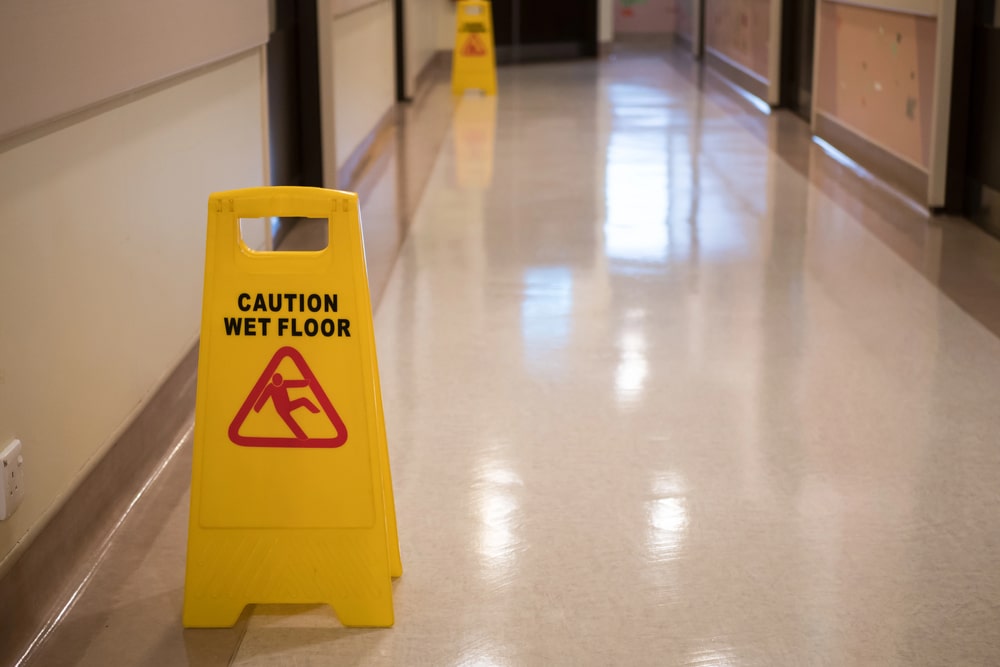
Grocery stores routinely place wet floor signs, but their effectiveness varies dramatically based on placement and quantity. Single signs in large wet areas don’t provide adequate warnings to customers approaching from multiple directions.
Signs positioned after wet zones rather than before them fail to warn effectively. Shoppers have already encountered slippery floors by the time they see warnings placed behind or beside hazards.
We photograph warning sign locations after falls to document whether they were positioned to actually alert customers before they stepped on dangerous surfaces. Poor placement helps prove warnings were inadequate despite being technically present.
The Open And Obvious Limit
Stores argue that obviously visible spills or debris shouldn’t create liability because reasonable shoppers can see and avoid them. This defense works better in theory than practice because grocery shopping involves divided attention.
Customers look at products, read labels, check prices, and manage children while navigating aisles. This legitimate multitasking prevents constant floor monitoring that open and obvious defenses assume occurs.
Courts increasingly recognize that even obvious hazards create liability in grocery settings where customer attention is reasonably divided among shopping tasks.
Employee Knowledge As Store Notice
When grocery store employees see hazards but fail to address them or notify management, the store has actual notice through employee knowledge. Scope of employment makes employee awareness count as store awareness.
We interview employees and review personnel records to identify workers who may have seen spills before customer falls. Employee statements admitting they noticed hazards but were too busy to clean them establish clear actual notice.
Video Surveillance Evidence
Modern grocery stores have extensive camera systems covering most sales floor areas. This footage provides powerful evidence about hazard existence, duration, employee proximity, and customer behavior.
Immediate preservation demands help secure video before stores delete it per retention schedules. Some stores claim footage doesn’t exist or was overwritten, but aggressive early preservation efforts usually obtain recordings.
Video showing hazards existing for extended periods while employees walk past proves both notice and failure to act. Footage of inadequate cleaning attempts or poor warning sign placement supports negligence claims.
Produce Department Hazards
Produce sections create constant slip risks from dropped items. Grapes rolling underfoot, lettuce leaves, and smashed fruit create hazards that grocery stores should anticipate and address through frequent monitoring.
Some stores implement protocols requiring produce employees to constantly monitor floors in their departments. Stores lacking these procedures or failing to follow them demonstrate inadequate safety measures for foreseeable risks.
The self-service nature of produce shopping makes dropped items inevitable. Stores cannot escape liability by claiming customers created hazards when their business model requires customer handling that produces predictable floor contamination.
Freezer And Refrigeration Moisture
Condensation from refrigerated cases and freezers creates wet floors that ice over in some conditions. These hazards result from store equipment and layout rather than customer actions.
Grocery stores must address moisture from their own refrigeration systems through drainage, frequent mopping, and adequate matting. Persistent wetness from refrigeration represents maintenance failures creating owner liability.
Shopping Cart And Distraction Factors
Grocery shopping involves pushing carts, managing children, reading labels, and juggling multiple tasks simultaneously. This divided attention is foreseeable to stores that design layouts requiring customer multitasking.
Insurance companies claim shoppers should watch where they step constantly, but this argument ignores grocery shopping realities. Stores know customers focus on products and prices, not constant floor monitoring. This foreseeable distraction affects comparative negligence analysis.
Incident Report Documentation
Grocery stores create incident reports after customer falls. These reports contain valuable admissions about hazard conditions, employee knowledge, and store response procedures.
We request complete incident reports, not just sanitized summaries insurance companies provide. Original reports often contain employee statements acknowledging problems stores later try to deny.
Store policies requiring immediate cleaning after spills appear in training materials and employee handbooks. Comparing policies to actual practices reveals gaps showing negligence when falls occur despite supposed safety protocols.
Corporate Policies And Local Failures
Large grocery chains have corporate safety policies establishing inspection intervals and cleaning protocols. Individual stores that don’t follow corporate standards demonstrate local management failures.
We obtain corporate policy manuals through discovery and compare them to actual practices at stores where falls occurred. Gaps between corporate requirements and local compliance help prove negligence through policy violations.
If you’ve fallen and been injured in a grocery store, don’t let the retailer convince you that spills are just unfortunate accidents nobody could prevent. Grocery stores create foreseeable hazards through their self-service business models and high customer traffic, making them responsible for implementing adequate inspection and cleaning systems. Understanding the heightened duties grocery stores owe customers helps you pursue fair compensation for injuries that proper store operations should have prevented.
